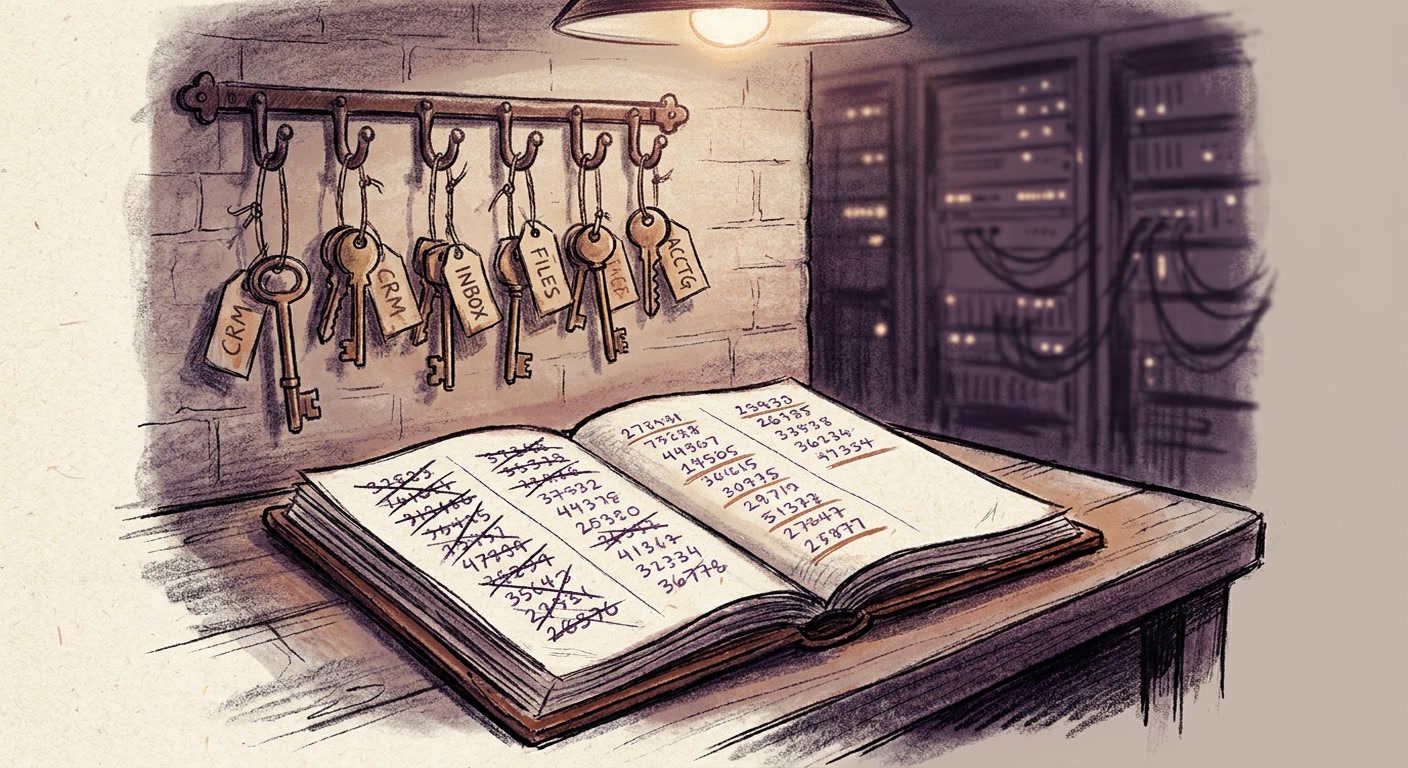
The viral take on AI replacement is mostly wrong. One part it got right.
A take going around says CEOs see the AI plan breaking. Two problems, the post says. Token costs beat what they paid the fired staff. And when tokens run out, the AI stops. No safety net. Just a spinning wheel. The post is good copy. Most of it is wrong. One part is real. It is a security problem.
The token cost argument is bad math
A senior knowledge worker in Canada costs $130K to $200K loaded. Add benefits, taxes, gear, and overhead. A junior support agent runs $60K to $90K loaded. Those are the floor numbers for what you would be replacing.
An AI agent doing the same work, built right, runs $2K to $50K a year in API spend. The range depends on volume and how sloppy the build is. With caching, smaller models on easy queries, and proper routing, cost lands at the bottom. Without those, at the top.
Where the take is right: some teams run agents with no caching, no routing, no batching. Every call burns 100,000 tokens. That is how the bill breaks. That person is paying $300K a year for AI. That person also built the deployment, which is why it's bad. The fix is not "AI costs too much." The fix is "your build is broken." Those are different problems.
I run a meaningful chunk of my own business on AI agents. The monthly bill is under what one of my own billable hours costs. The math works because the deployment was built right, not because AI is cheap.
The "tokens run out, AI stops" argument is FUD
APIs do not run out. Plans have a usage cap. But if you go over, the provider keeps billing. The work does not stop. They do not cut you off mid-sentence. The only way an AI "stops" is if you set a hard spend cap and hit it. Or your prompt drifted and the agent started looping. Both are ops issues. Fixable in a day if anyone is watching.
I see operational issues regularly. I have a pentester agent I run myself, and there are days I watch it struggle with something I already know the answer to. I have to step in and feed it the context. That is not the AI failing. That is the operator's job. If you are deploying agents and nobody owns the operational layer, you will have outages. Those outages are not the AI's fault. They are yours.
"The AI just invoices you for the outage" is clever copy. It is not how the relationship works. The agent is not your employee. It is a tool you run. If the tool stops, you fix it. You do not pay it severance.
The part the take got right
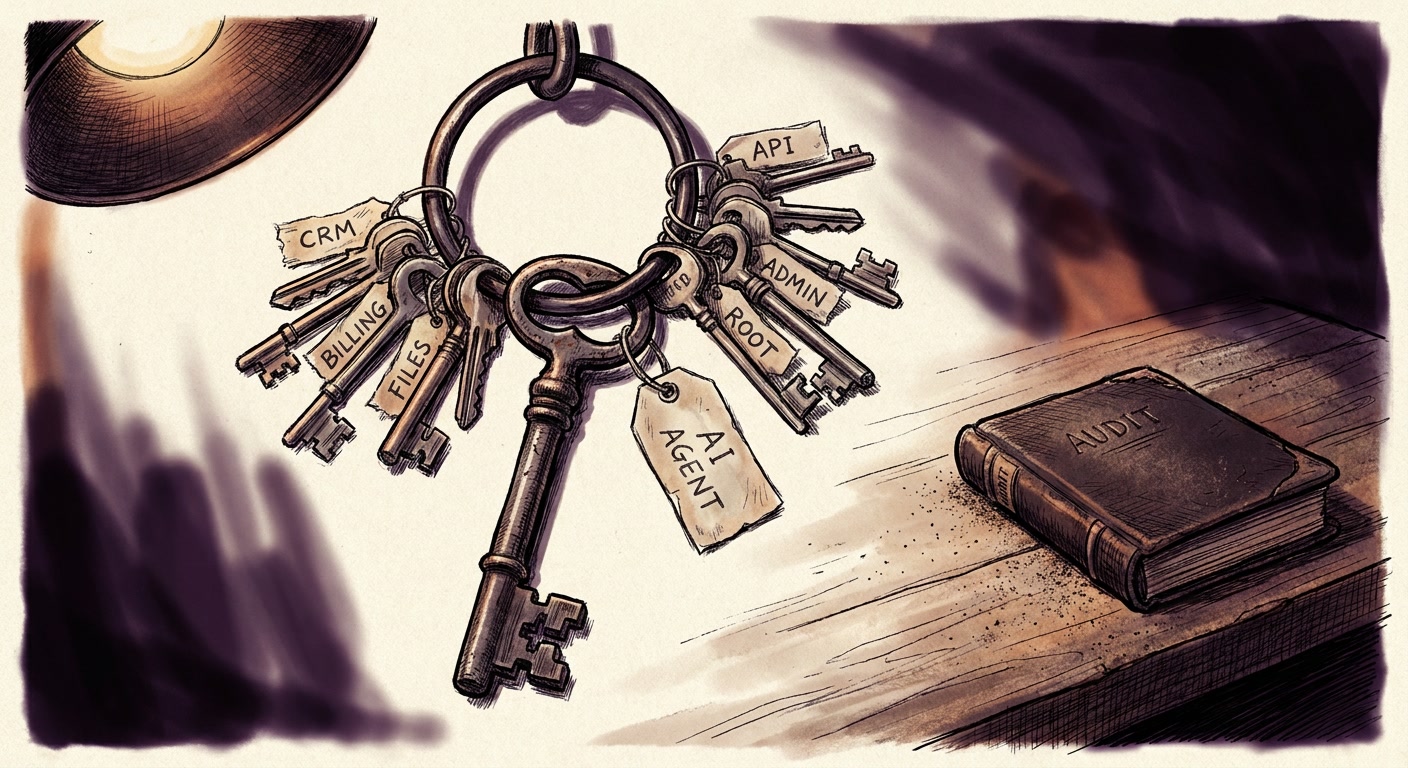
For an AI agent to do real work, it needs access. Real access. To your CRM. To your accounting system. To your inbox. To your scheduling tool. To whatever data the work touches. The viral take called this "handing over the keys to a process that has no loyalty, no discretion, and no skin in the game."
That part is accurate. And nobody at the marketing layer is talking about it.
I spent a decade red-teaming networks before I built this business. The pattern I see now is the same one I found then. Wide open every time. Service accounts with admin rights nobody checks. OAuth grants that stack up to "this vendor can read every email I have ever sent." API keys in a GitHub repo because someone needed it to work on a Tuesday. None of that started bad. All of it ends bad.
AI agents make this worse. They need wider access than a person would ask for. They touch many systems at once. They get added fast by people who do not know what scope to request. Then the person who set them up moves on. The agent stays. Permissions intact. Nobody checking.
What to do about it
Treat your AI tools the way a security team treats any other privileged identity in your environment. Inventory them. Audit their scopes. Rotate their credentials. Restrict them to least privilege. Set up a process to review the inventory monthly. None of that is exciting. All of it is the difference between AI as a tool and AI as the keys-out-the-door story the viral post was actually pointing at.
This is what the Shadow AI Audit I run is built to do. Five modules. AI tool inventory. Permissions sweep across Google, Microsoft, and your vertical stack. Agent scope review. Prompt-injection spot check. OAuth rotation plan. The output is a written report you can act on inside a week.
If you have run AI tools in the last year and no one audited the access path, you are at risk. Not because AI is dangerous. Because identities you do not track are how you get breached. The medium changed. The pattern did not.
The shorter version
The cost panic is bad math. The continuity panic is FUD. The permission problem is the one part that lands. It is also the one part the people sharing the post are not fixing. Treat your AI like a system that holds the keys. Audit it. Restrict it. Track it.
Talk to me about a Shadow AI Audit for your team.
← Back to all posts