Your Agents Should Build Their Own Tools
Every new tool goes through one person. Every fix too. Every new skill, same thing. That is a bottleneck. It is the same one your business had. The one you set out to fix.

The wall I hit
I spent a year building my own AI setup. Named agents with set roles. Memory that sticks around. Skill libraries. The whole stack. It worked. But at some point it stopped scaling. The reason was simple, and kind of embarrassing.
Everything ran through me. Or really, through my main agent, Ender. Need a new tool? Ender builds it. Need a bug fixed? Ender fixes it. Need a new flow for another agent? Ender writes it, tests it, ships it.
The whole point of many agents was to spread the work. But the build layer stayed in one spot. I had a team where one member could build. The rest had to wait in line.
The pentesting lesson that should have been obvious
My background is ethical hacking. The work has a clear order. Map the system. Find the weak points. Figure out what tools exist. Build what is missing. I use the same steps for AI infrastructure.
When I looked at the slow part, it was clear. The weak spot was one place that could break the whole pipeline. One agent did all the building. Every other agent had to wait on that one agent's time and focus.
Real teams don't work that way. One coder doesn't build every tool for every team. You give people their own space. You give them room to fix things. You tell them what they own. The boss points the way and checks the work. The boss does not type every line of code.
What delegation actually looks like
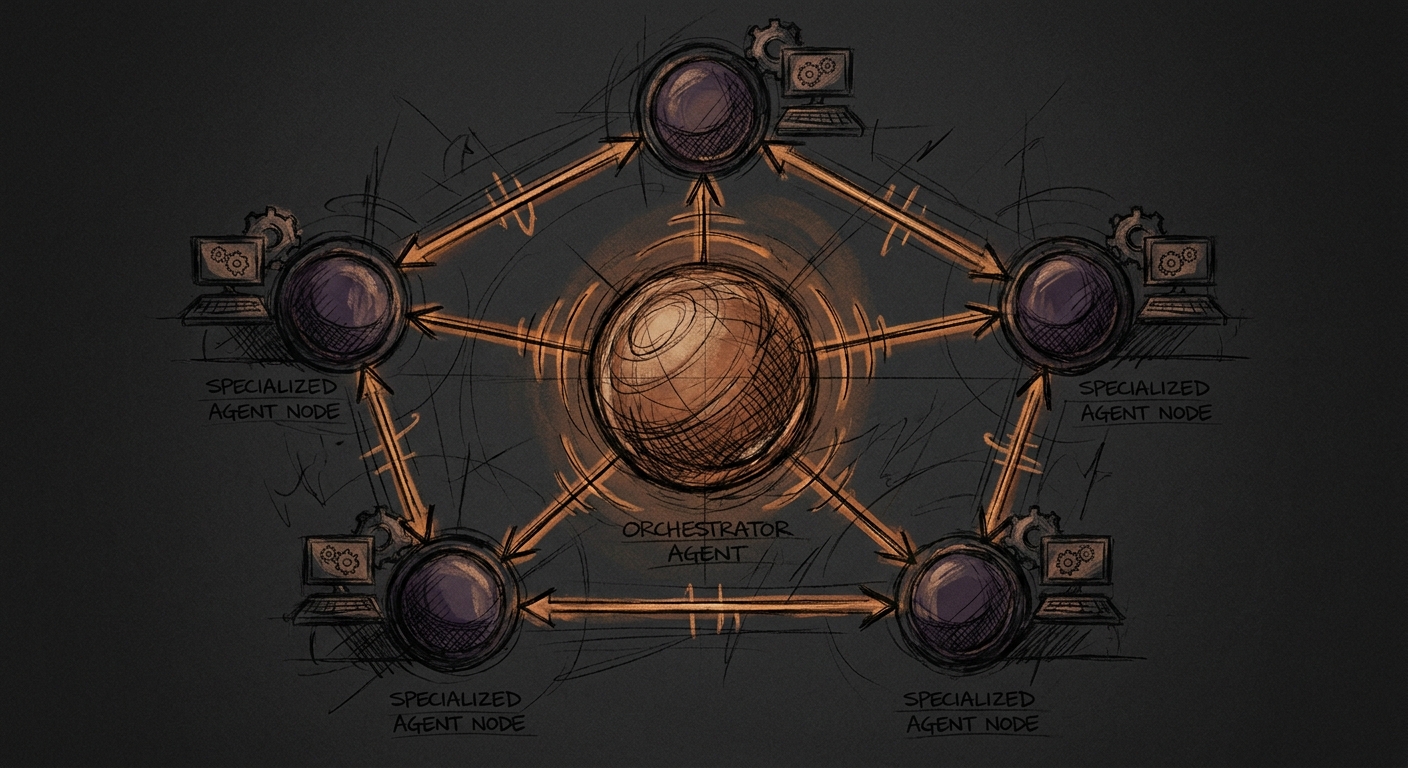
The fix was simple. Give each agent its own dev box. Its own server. Its own way to write code, test it, and ship it in its lane. The sales agent builds its own outreach tools. The finance agent writes its own report scripts. The boss agent hands off the task, checks the work, and moves on.
This is not the same as giving each agent root and hoping it works out. Each one has a set scope. They build tools for their own job. If the sales agent needs to touch infra outside its lane, it asks first. That is the line.
It comes down to absorbing versus delegating. Absorbing is when the boss grabs every task that has no clear owner. Delegating is different. The boss picks the right agent for the job. The boss gives them the tools. Then the boss holds them to the result.
Why most AI setups get this wrong
Most folks build agent teams wrong. They treat the lead agent like a super-agent. It knows it all. It does it all. It picks it all. The other agents are just shells on one tool call. They can run jobs. They can't build new stuff.
That works for demos. It breaks in real use. Real use means edge cases. Odd inputs. Missing tools. Stuff that has to be built on the spot. If your agents can't fix their own problems, every edge case turns into a ticket for the boss agent. That line of tickets grows faster than one agent can clear it.
The learning loop I wrote about before plays in here too. An agent that can build its own tools can fix its own tools. It spots a gap. It writes the fix. It tests it. It ships it. The loop stays with the agent that hit the problem. That is how systems get better fast.
The rules that make it safe
Autonomy without rules is just chaos. Here is what keeps it tight.
Every move an agent makes is out in the open. Builds a tool. Tests it. Ships it. I see all of it. No quiet work. No hidden edits. That visibility is the price for letting them run on their own.
Second, agents stay in their lane. The sales agent builds sales tools. It does not touch DNS or server configs. If an agent steps out of scope, the system catches it and flags it up.
Third, the boss checks results, not steps. I don't need to read every line of code an agent writes. I just need to know the tool works. I need to know it fits the scope. I need to know it did not break other things. Output over steps.
Fourth, agents ask for help when stuck. If a task is outside their scope or skill, they say so. They don't burn hours on a wall when the fix needs new access or a fresh set of eyes.
What changes when you make this shift
The boss stops being the slow part. The boss starts being the planner. No more building tools all day. Now the job is to design the system, set what comes first, and check that the team ships the right stuff. That is what a tech lead does. Not do all the work. Make sure the right work gets done.
Your agents move faster. They hit a wall, they fix it, they keep going. No waiting on you. The loop goes from hours to minutes.
And honestly, the whole thing gets tougher. When one agent's tools break, it can fix them. You don't have one weak point anymore. The system heals at the edges. Nothing has to flow through the center.
If you build AI infrastructure and you're still the one who builds all the tools, you're the bottleneck. Let your agents fix their own stuff. Hand off work. Check it. Stop doing it all.
← Back to all posts