Your AI Needs a Name
Not because it's cute. Naming it makes you think. You start to see it as one thing. One thing that stands in for you. It knows your context. It does work for you before you ask.

The maturity model nobody talks about
Most people miss what's happening with personal AI. Here's the path. Chatbots first. Then agents. Then a named assistant.
Stage one is chatbots. You open a window. You ask a question. You get an answer. No memory. No context. Every chat starts from zero. Most people still live here.
Stage two is agents. You give an AI a task and some tools. It can search the web, write files, call APIs. It does things on your behalf. This is where the hype is right now. Everybody's building agents.
Stage three is a named helper. One AI that knows your goals, your work, your people, your day, what you like. Not a tool you grab when you need it. It is there all the time. It acts on its own, not just when you ask. This is where the real value sits. And almost no one is here yet.
Agents are infrastructure, not the product
Here's what I think most builders are getting wrong. They're treating agents as the end product. Build an agent that can book flights. Build an agent that can summarize emails. Build an agent that can write code.
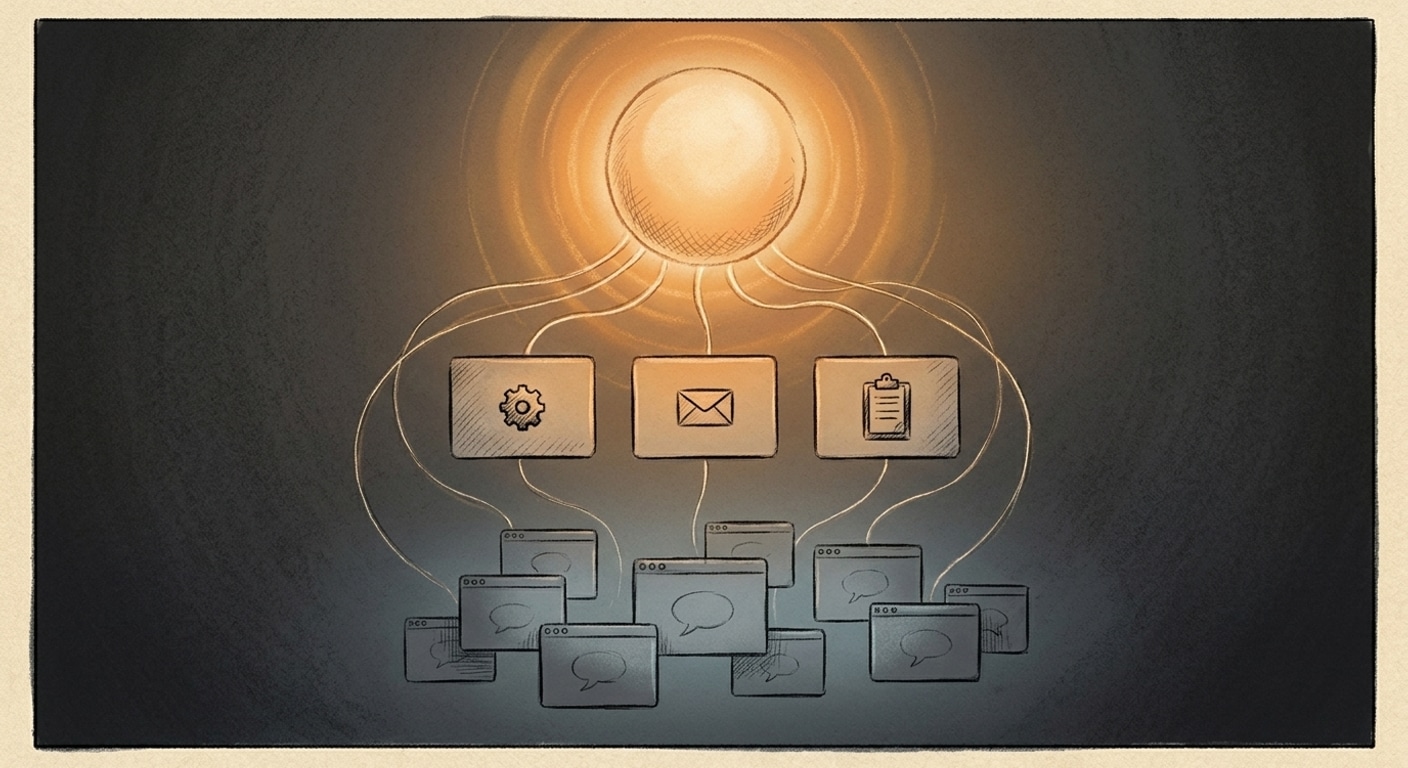
Those are tools. They matter. But they're just plumbing. The real product is one named helper that sits on top of all those tools. It picks which one to use. It picks when. It picks why. The helper is what you talk to. The agents are the pipes behind it.
Daniel Miessler put out a video. It's about where personal AI is going. He's been building it. He has a named helper called Kai. Kai has dozens of public skills. It has hundreds of work flows. A dashboard ties it all together. He calls his idea TELOS. Here's what it means. You set your ideal state. You set where you are now. The helper works to close the gap. Not just when you ask. All the time.
I tried to build this for a long time. I kept getting stuck. Then I saw Daniel's video. It hit me. In ethical hacking, we say to stand on the shoulders of giants. Daniel got the build far enough that I could pick it up. From there, I could take it higher. Credit where it's due. The breakthrough was his.
The pentesting mindset applied to AI
My background is ethical hacking. That work follows a system. Map the target. Find the ways in. See what tools exist. Build what is missing. I built my own AI setup the same way.
I didn't start by saying I want a chatbot. I started by mapping my own work. Where does my time go? Where are the gaps? What calls do I make over and over that could use better context? Then I built named agents. Each one had a role. Each one owned a set part of my business.
The names weren't for show. They were a build choice. A name gives the agent a scope. It gives it a way of acting that shapes how it talks. It gives it an identity that holds context over time. It stops being a script. It starts being a coworker.
Recursive learning is the key
Daniel said something in that video that was the key for me. The practice is simple: ask the AI how it could improve itself. What's slow? What context do you wish you had? What would make you better at this task? Bring that loop into your daily work and the system starts pointing at its own gaps.
The loop only works when the AI knows enough. The system helps you fix the system. But it needs context. If it starts at zero each chat, it can't see the gaps. It does not know what it does not know. Give it a name. Give it memory. Give it deep context. Now it can help fix itself.
Daniel's system watches itself. It spots gaps. It shares ideas. It is not just a tool you use. It is a system that grows. I picked up that way of work from him. It changed the path of my own build.
What this means if you run a business
I run service businesses. My AI setup is built by an operator for operators. That changes what I care about. I don't build for demos. I build for a Tuesday when three things hit at once. I need a tool that already knows the story.
If you run a business and you still talk to AI through a blank chat box, you are missing most of the value. The chat box does not know your clients. It does not know your pipeline. It does not know your goals for the quarter. Each time you open it, you start over and explain yourself again.
Give your AI a name. Give it your context. Give it a defined role. Let it accumulate knowledge about how you work. That's the jump from stage two to stage three. And once you make it, you won't go back.
Where this is going
Daniel comes at this from a security researcher's lens. I come at it as an ethical hacker who runs service businesses. Different shaped problems, similar shaped tools. We're not building the same system, but we're building toward the same shape: named assistants with deep context, proactive monitoring, skill libraries, and recursive self-improvement.
This is not by chance. This is where personal AI goes. You push past the agent hype. You ask the real question. What would it look like if this thing actually knew me?
The answer starts with a name.
← Back to all posts