What actually happened
My wife said the rep came by. I asked her what he said. She told me I could watch the bell video if I want. So I sent my agent to watch it for me. It came back with a full report.
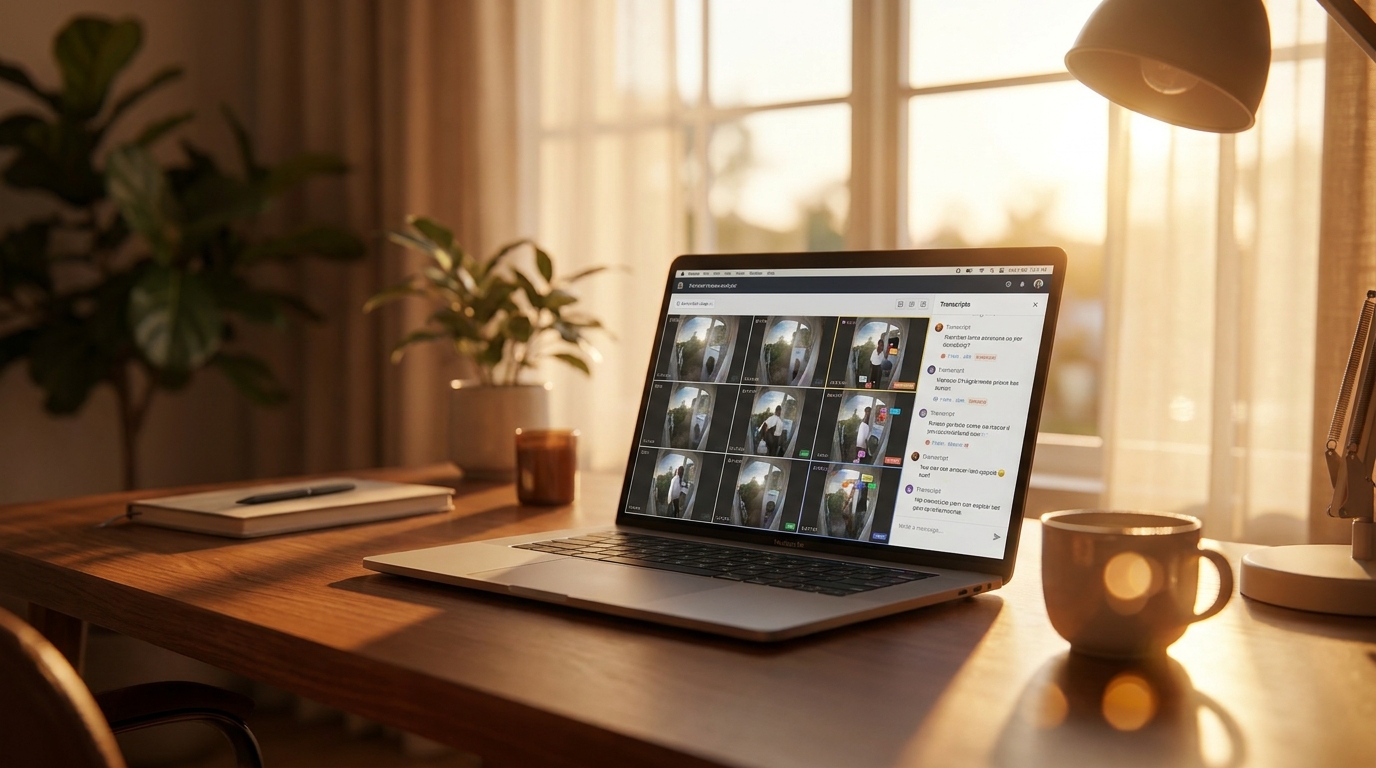
It logged into my UDM box with keys I had set weeks ago. It pulled the list of all my cams. It found the bell cam. It asked the events list for all rings in that time span. It found the exact ring at five oh three oh seven PM. It got the five minute clip. It split the sound out and ran it through Whisper. It pulled six still shots from the video at key times. It read the small name sewn on his coat and matched it to the flyer in his hand. It searched the web for gripes about that brand. It found many BBB and review sites listing their door tactics. It told me the rep had no card on him. That is a sales red flag. It walked me through what to do if anyone in my home had signed on his tablet. It told me about the ten day rule in Ontario law for direct sales.
One prompt in. One minute out.
What this is not
This is not a flex about my cool rig. It is not a "look how much I can automate" post. The point is more dull than that. And more key.
The point is that the gap from "I have a vague worry" to "I have a full answer with proof" used to be hours. Or days. You would watch the clip on your phone. You would squint at the badge. You would search the firm name. You would skim BBB. You would ask a peer. You would half recall what the guy said. You would guess.
That gap is now seconds if your tools are wired up. And if your tools are not wired up that gap is still hours and you live with the guess.
What was actually wired up
None of this is rare. The parts are all things a normal small shop owner has or can get for the cost of focus.
- A UniFi Dream Machine running Protect with a doorbell camera. Off-the-shelf hardware, one-time purchase.
- An AI assistant with API credentials for the things I want it to touch. The doorbell. The transcription model. A web search. Vision on the still frames.
- An agent that, given those credentials, reviews the documentation, figures out how to interact with each service, and does what I ask it to do.
Not a stack. Not a code base. Not a "platform." Keys and an agent and trust that it knows how to use them.
The lesson hidden in this story
Most folks who read about AI think the value lives in the model. The new one. The big one. The smart one. So they wait. They watch test scores. They argue about which lab is ahead.
The value did not live in the model today. The model that wrote out the sound is two years old. The model that read the coat text is a year old. The vision model is a year old. The model that wrote this post is from this week but it could have been a year old too.
The value lived in the fact that the sound file was there. The keys were in the right spot. The cams were on the right net. And the AI was set to figure out how to use what it had. I had checked it could. So when I asked it worked.
The wiring is the choke point. Not the model.
What I want you to take from this
If you have a setup at home or at a small shop and you are asking "would AI help me" here is the test. Pick one dull thing that comes back again and again. The bell. The inbox. The accounts sheet. The thing that shows up each week and steals fifteen minutes from you.
Now ask what would it take to wire that one thing up so I could ask about it in plain words and get a real answer with proof.
Most times the answer is a few keys and a small piece of glue code and someone who has done this before. The model is now the easy part of the stack. The wiring is the hard part. Once the wiring is there the bell question gets answered in one minute. So does the inbox question. So does the sheet question.
That is what "using AI well" looks like in real life. Not autonomy. Not magic. A wired up box that when you ask it something dull and specific gives you back the truth.
The sales rep left at five oh eight. By five oh nine I knew more about him than he knew I knew. And I had moved on with my night.
That is the bar. Anything less is not the AI. It is the wiring.