Everyone's telling you to integrate AI. Here's what that actually means.
You run a small business in 2026. You've heard the same line for a year. Every vendor says it. Every event says it. Every LinkedIn post says it. Every consultant with a new deck says it. Add AI to your work. Almost none of them say what that looks like in a real one.

The chorus
Count the pitches you got in the last six months. Your accounting software rep wants to sell an AI add-on. Your local chamber sends a newsletter. The subject says "AI for small business." A LinkedIn contact pings you about a course. A consultant wants 90 minutes to tell you why you need an AI plan. A trade show vendor hands you a one-pager. The word "transform" is on it twice. The flood is the point. You can't go to an event. You can't open your email. You can't scroll your feed. Every time, you hear the same thing. AI will save your business or eat it.
The headline never changes. Integrate AI into your workflow. The second half of the line is missing. Which AI? Which workflow? Wired to what? Run on what? Checked by who? The answer is almost never there. The pitch stops at the verb. It thinks the buyer will work out the rest. The buyer does not. The buyer is busy running a business.
That's the part nobody says out loud. The chorus is loud. The instructions are nowhere.
The chasm
I wrote this on our home page a few weeks back. I'll write it here too. It's the whole point. The gap between "I know AI exists" and "AI runs my business day to day" is huge. Crossing it is the whole game.
Here is the gap on a real business. Picture a real estate agent in a small town. Over the weekend, 15 new leads come in from Realtor.ca. They need to be sorted. Each lead needs a first email that sounds human. A few need a Monday slot on the calendar. A couple need a quick home search. Then the agent can send three good picks, not a flat brochure. Monday morning hits. The agent has 15 leads. Three hours of meetings. School drop-off. A listing at eleven. Someone tells them to add AI to their day. Okay. Which tool. Which API. Hooked to which inbox. Checking which calendar. Writing in whose voice. Handing back to the agent when. That is the gap. No one who yells "add AI" is giving that agent real answers. That is why most do not do it.
Why most tools don't close it
Look at what's on sale and you see two kinds of tools. Neither one crosses the gap.
Shape one is the small tool. Calendly books a time. ChatGPT writes a draft if you paste a prompt. Jasper helps with marketing copy. Each one fixes one step. That helps. It is still tiny. Back to the real estate agent. Calendly books a time if the lead clicks the link. But someone still has to pick if the lead is worth a slot. Someone has to write the first email. Someone has to check the MLS. Someone has to follow up on Thursday. The tool covers one of eight moves. The other seven sit with the owner. Shape two is the full swap pitch. A vendor says the AI will run your whole shop. Fire your help. Let the model decide. That is not how real shops work. Real shops have hard calls that need a human. Client trust lives in the owner's head. Small odd cases pop up all day. Those do not fit a demo.
Neither shape crosses the chasm. The narrow slice leaves you doing most of the work. The full replace asks you to pretend the work doesn't require judgment. Both leave the buyer stuck on the same side they started on.
What closing the gap actually looks like
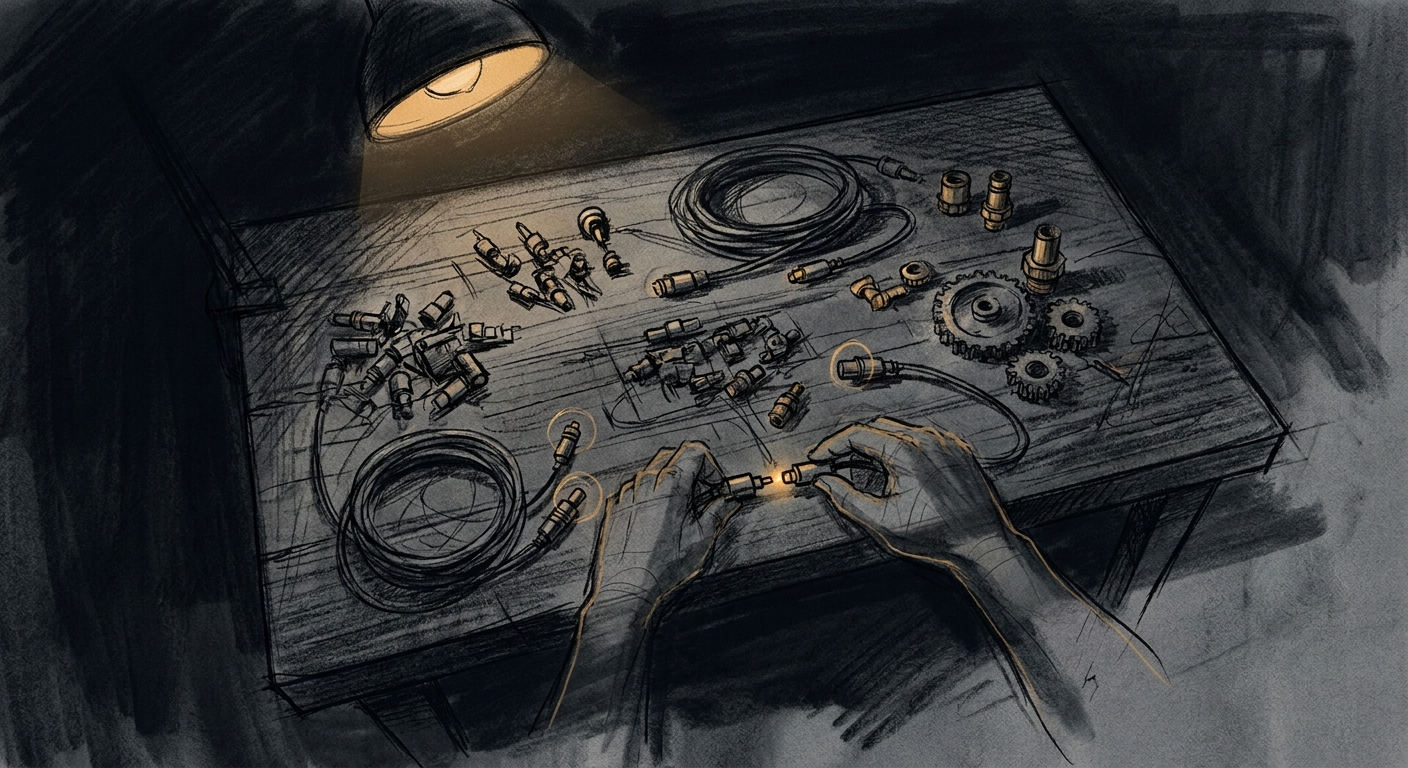
Closing the gap means we set it up for your real business. It's an agent we train on your real work. Not a template. It reads the inbox you check. It writes in the voice you use. It holds time on the calendar you live in. It talks to the CRM or sheet you keep. It pings a human the second the work truly needs one. It stays quiet the rest of the time. A chamber seminar can't install that for you. A post on LinkedIn can't either.
On our side, Digital Worker and Digital Assistant are the same build. What changes is who owns it. Digital Worker means we host it for you. You pay each month. You can cancel any month. We run the boxes. Digital Assistant means you pay once. We build it. You own it. After the build, you do not come back to us for help. You go to the assistant. Same shape, different deal. Both are wired up by us. We do not hand you a login and walk away. That is what it means to add AI to a small business. It is plumbing. It is patient. It is specific.
If this hits home, here's why. You've heard the same song too many times. You're still on this side of the gap. You're not late. Most businesses are right here with you.
The close
Everyone is telling you to integrate AI into your workflow. Almost nobody can tell you what that actually means on a real business. Connecting those dots is what we do. If you want a walk through what it would look like on yours, the Digital Worker page is a fine place to start. No strategy session, no deck, just the shape of the work.
← Back to all posts