Getting out of your own way.
I have a good manager. The best one I've ever had. The thing she told me that stuck was this: "I hired you because you're smart. My job is to get out of your way." That's it. No micromanagement playbook. No weekly status template. Just trust, plus room to run. Best working environment I've been in.
I've been thinking about this a lot. I had to do the same thing with my AI setup. It was way harder than it sounds.
The builder's trap
Here's my problem. I like to build stuff. I like wiring things up, testing them, and watching them run. Doing the work feels good. I'm not faking that. I've spent almost ten years in cybersecurity doing hands on tech work. The rush of "I made the thing go" has not worn off.
So when I started building AI for my own business, I did what felt right. I built the tools. I built the agents. I built the workflows. Then I kept going. I'd finish a thing, and instead of letting it run, I'd start tweaking it. Tuning it. Adding stuff. Rebuilding parts that already worked, because I thought I could make them 10% better.
The infrastructure was done. I just couldn't stop touching it.
What I actually figured out
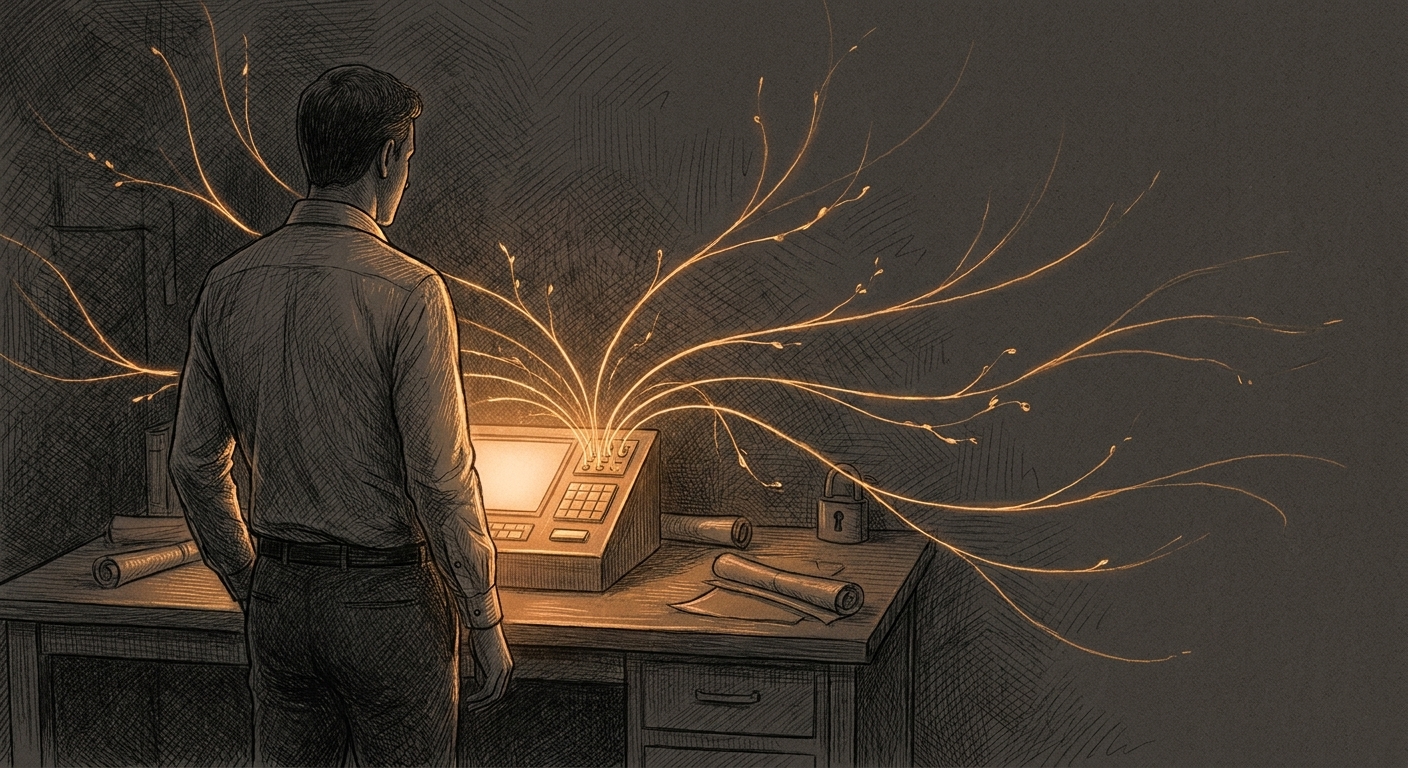
The fix, and I feel dumb saying it out loud, was handing the AI all my tools. Every single one. CRM. Email. Calendar. Docs. Drive. DNS. Hosting. The whole stack I run my business on. Then came the hard part. Actually stepping back.
Not "stepping back a bit." Not "letting it do the easy parts while I watch." I mean really stepping back. Letting it run whole jobs start to finish while I worked on other things. Ideas. People. Big picture stuff. The work that has no command to type.
I won't hand over my bank logins or my most private client files. Lines exist. But the share I can pass off is much bigger than I thought, and that gap was the point. The unease wasn't a red flag. It was what it feels like to drop the doing layer for the first time in my work life.
The manager analogy
That manager I told you about. She didn't hire smart people and stand over them telling them how to type. She hired smart people and gave them problems to solve. Not steps to follow. Her value wasn't in knowing how to do the work. It was in knowing what work had to get done. And trusting the people she hired to figure out the how.
I had to do the same thing with my AI. I built it to be strong. I gave it tools. I gave it context. I gave it access. My job stopped being "do the thing." It started being "pick what needs doing." That's a new muscle. And if I'm honest, I had not used it much. The doing part was so thick I never had to.
The bottleneck was always me
Here is the part that stings. The block in my business was not the tech. It was not the tools. It was not a lack of skill. The block was me. The owner. The guy who could not stop doing the work long enough to think about what work he should be doing.
I'm not the only one. Every small business owner I talk to has a version of this. They are too deep in the day to day. They can't see the business from the outside. They answer emails. They don't ask which emails should not be there at all. They build proposals. They don't ask which clients are worth a proposal. They do the work. They don't pick what the work should be.
The fix isn't "work harder." The fix is to stop doing the things a system can do. Start doing the things only you can do. Your judgment. Your relationships. Your taste. Your weird, specific, hard to name sense of what matters. That is what nobody and nothing can replace. The rest is just execution. And execution can be handed off now.
What changed when I actually let go
Three things happened fast once I said yes to this.
First, I started having more ideas. Not because I got smarter. Because I had space. When your calendar is not full of work tasks, your brain starts doing what it wants. It wanders. It looks for interesting problems.
Second, my relationships got better. I started showing up at networking events. I was really there. Not stuck in my head, running through the 14 things I still had to do that night. I followed up the same day. Not three weeks later. The follow-up system ran without me.
Third, and this part stung, I had to ask if I was any good at the big picture stuff. When the doing part goes away and all you have left is "what should this business do next," you learn fast if you have an answer. Some days I do. Some days I don't. That's the truth.
The lesson
I hired something smart. My job now is to get out of its way.
That doesn't mean I'm not in it. It means I'm in it a new way. I pick what problems matter. I set the path. I keep the ties no tool can keep for me. The clicks, the wires, the sends, the files, the dates, the format. All of that runs in the back. That's where it goes.
If you're a founder reading this and feel "no one can do it as well as I can," I get it. I felt it too. You're right, in a way. No one will do it just like you. But "just like you" at scale can't happen. "Good enough, on its own, while you think about what really counts" can happen. It's not just possible. It's the whole point.
Get out of your own way. It's the hardest thing you'll do. And it's the only thing that lets everything else start moving.
← Back to all posts