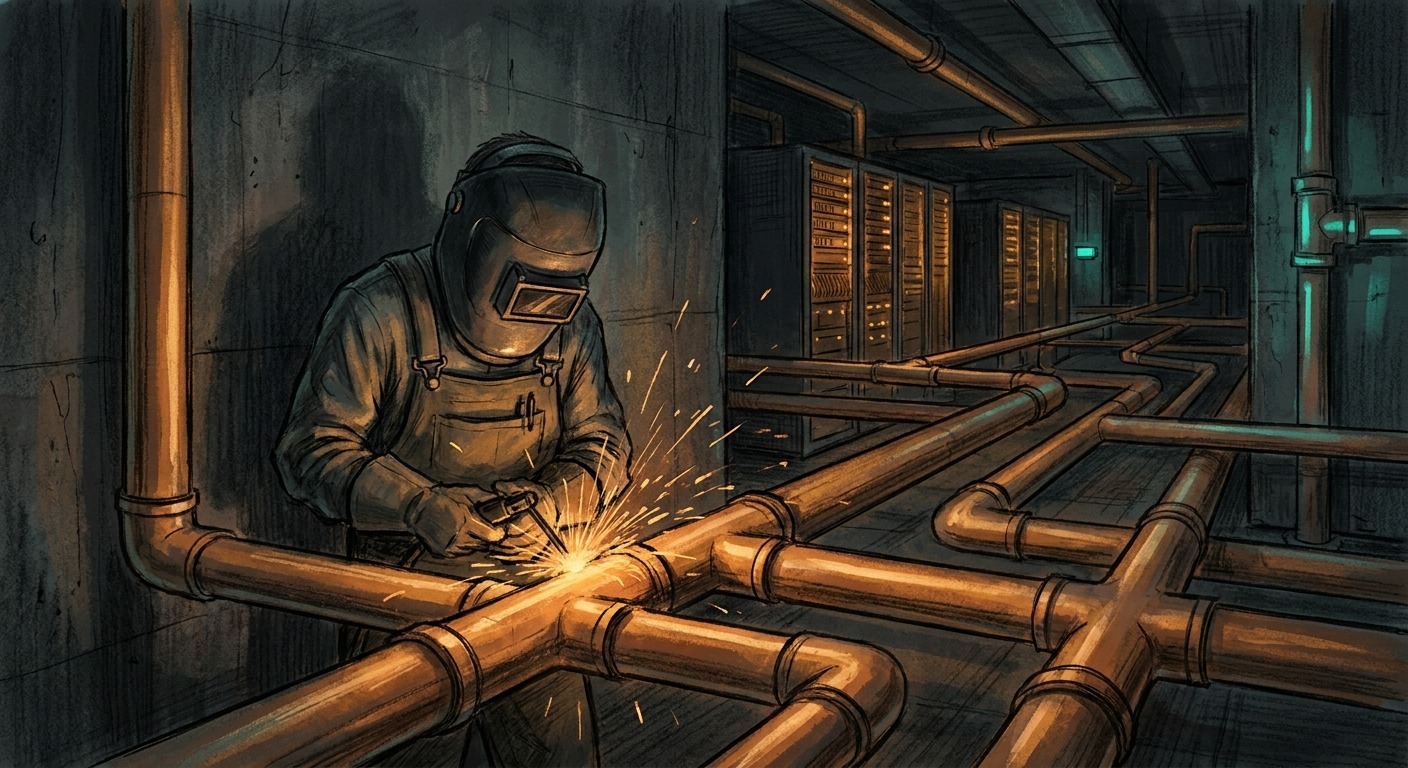
The plumbers of the digital world.
Everyone is being told to use AI right now. Every talk. Every LinkedIn post. Every CEO email. "Use AI. Be AI first." Most folks have no clue what that means. They paste a prompt into ChatGPT. They paste the answer into an email. They call it done. Then they wonder why nothing changed.
That's not implementing AI. That's using a chatbot. There's a difference the size of a house.
What people think AI implementation is
Open ChatGPT. Ask it something. Copy the response. Paste it into your actual work. Repeat. Maybe graduate to Claude when you run out of GPT quota. Maybe try Perplexity when you want something cited. Now you've got three tabs open, you're context-switching between them, and the work is still getting done by you. The AI is a better Google. That's it. You've added a tool to your toolbox. You haven't changed anything about how the work gets done.
I'm not mad at people for this. Honestly, it's what the tools teach you to do. Every onboarding is "here's a chat window, type your question." That framing is the problem. It says the AI is an assistant you talk to. It's not. At least not where the actual change lives.
What it actually is
Real AI work is plumbing. It happens between the tools, not inside one. You hook your email to your CRM. Then to your calendar. Then to your docs. Then to your finance system. Then to your outreach pipeline. Then to the AI agent that reads it all and picks what to do next. The AI is not the product. The AI is the engine. The product is the set of pipes that feeds it work and pulls the results back out.
Almost no one is doing this. It's hard. It's hidden from the outside. It does not look like a demo. No picture shows it. Think of this case. A new lead writes back to an email. That email came from a draft. The draft used your own voice guide. Your CRM then starts a check on the lead. Your calendar updates too. That is seven tools talking. No vendor ships all of that. You have to wire it up. Wiring is where the real work lives. It has been that way in every tech wave. All the way back to power lines.
The plumbers win
We think we're the kings of the planet. We built something that can do everything we do digitally. Read, write, research, decide, draft, follow up, schedule, remember. And collectively we're still treating it like a search bar. The people who figure out the wiring are going to eat. Not the people who build the AI. Not the people who sell the AI. The people who can plumb it into a real business, end to end, and make the pipes invisible.
That's the chance. That's what Obsidian AI Labs is. We're plumbers. We show up. We look at your stack. We hook up the systems that should have been hooked up years ago. We give you something that runs while you sleep, not something you babysit each morning. It's not flashy. It's not a demo. But it's the real change.
What I'm actually doing right now
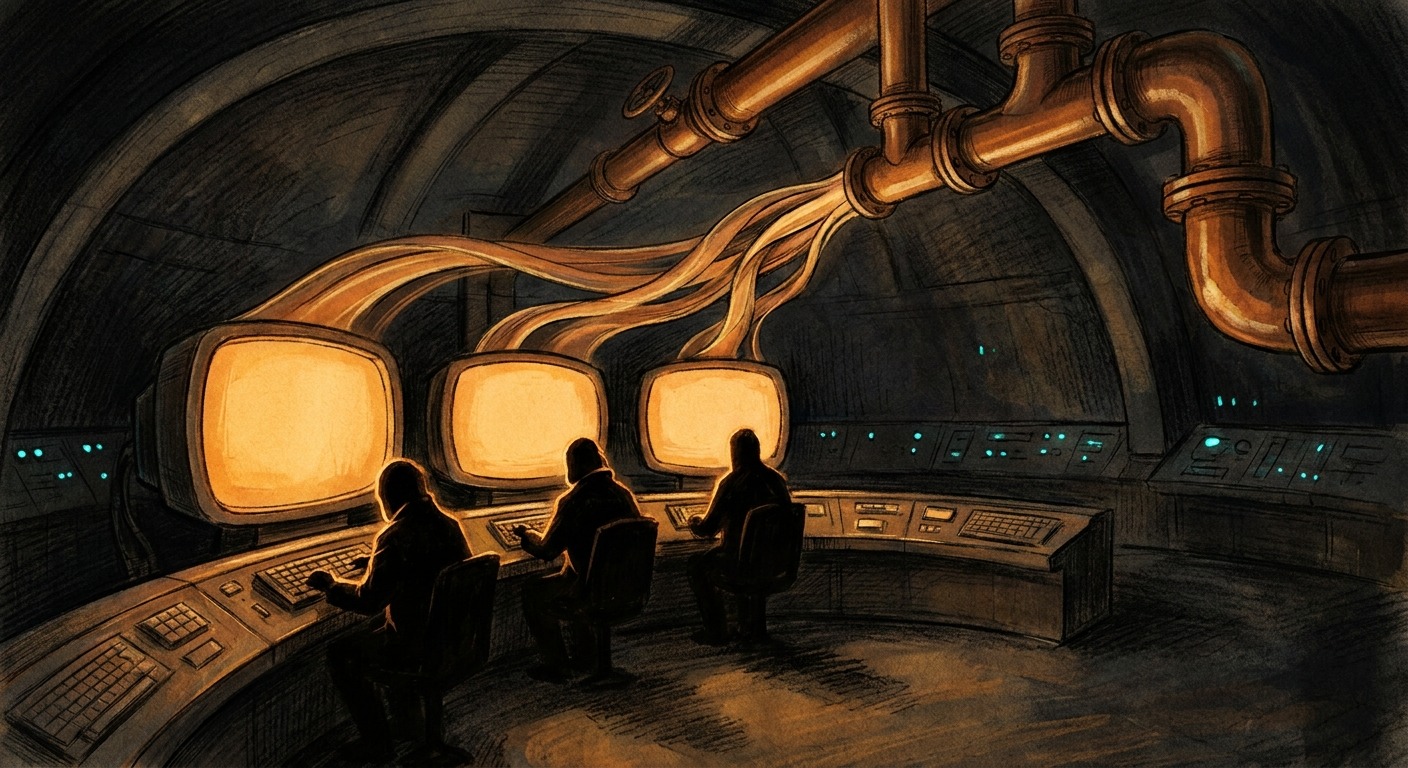
I have three agents running at once. Not one. Three. A main one on my desktop. A sales one on a droplet. A finance one on another droplet. Each runs its own work. Each does its own tasks. Each reports back. They move so fast it is wild to keep up.
It has been hard on my body. It has been hard on my head. I won't lie about that. Three systems run at once. Each one does a full day of work. I try to keep it all in line. That is a new kind of tired. But I think I am close to done. The pace they set is real. By hand, this would take me six months. I built it in three weeks. I am not the one typing.
Let go of control
Sometimes you have to let go. That part nobody talks about. It's not a tech skill. It's a feel skill. Your sales agent writes an email. You did not write it. The voice is close to yours. Not the same. Now you have a choice. You can edit each line. Make it sound just like you. That puts you back at the desk, doing the work. Or you can let it go. Read it for errors. Hit send. The second way is harder. The second way is the whole game.
I came from cybersecurity. Nine years of hands-on work. Control is baked into how I think. Check it, audit it, do it myself, because that's the only way to know it got done right. That instinct helps. It was also the thing keeping me small. I had to learn the gap between "the system needs a guard here" and "I just don't trust it." One is engineering. The other is ego.
Stop trying. Start doing.
I want to build this for everyone. I want the world to stop trying and start doing. Most folks I talk to are three months into "thinking about AI." They are zero months into running any of it. The gap between who rides this wave and who watches it pass will be months, not years. The split is not about smarts. It is about doing the work.
This blog is how I think out loud. I jot down where I am. Where I'm stuck. What I'm working through. It's public. Anyone can read it. I don't have the format nailed yet. What I have is a working setup, a lot of scars from real fights, and a strong belief that the world needs to rethink what putting AI to work really means. It's not a chatbot. It's not a tool. It's a new way of working, and nobody has shown you yet.
Be the plumber. Or hire one. But stop pretending the chat window is the whole thing.
← Back to all posts