The tools nobody sees.
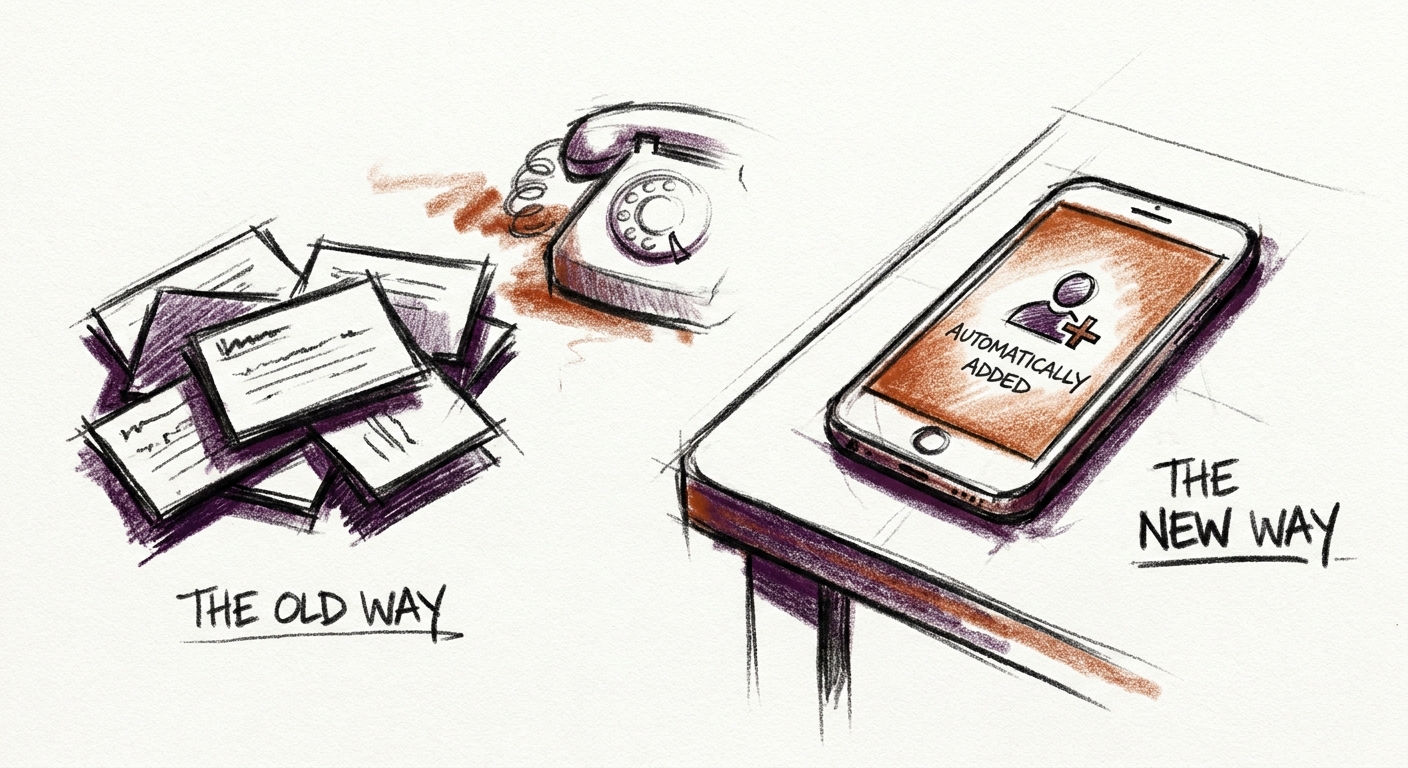
I built a business card scanner this week. Not an app. Not a product. No landing page. No waitlist. Just a small in-house tool. It does one thing. I take a photo of a card. It reads the text with computer vision. It checks if the person is in my CRM. If yes, it updates them. If no, it adds them. One tap. Done.
Why this matters more than it sounds
I go to a lot of networking events. Chamber of Commerce meetings. BA5 sessions. Coffee one on ones. Industry meetups. Each one ends with a business card. That card sat in my jacket for three days. Then I tried to type it into my CRM by hand. Sometimes I got to it. Most times I did not.
That is not a tech problem. It is a friction problem. The CRM is there. The fields are there. The data sits in my hand on a piece of cardstock. The only gap between "I met this person" and "they are in my system" was five minutes of typing. I never felt like doing it at 9 PM after a networking event.
So now it's automated. Snap. Tap. Done. Five minutes times three events a week times 50 weeks a year is 12.5 hours of manual data entry that just disappeared from my life. And more importantly. Every contact I meet actually makes it into the CRM now. Not most of them. All of them. Because the friction is gone.
Nobody will ever see this tool
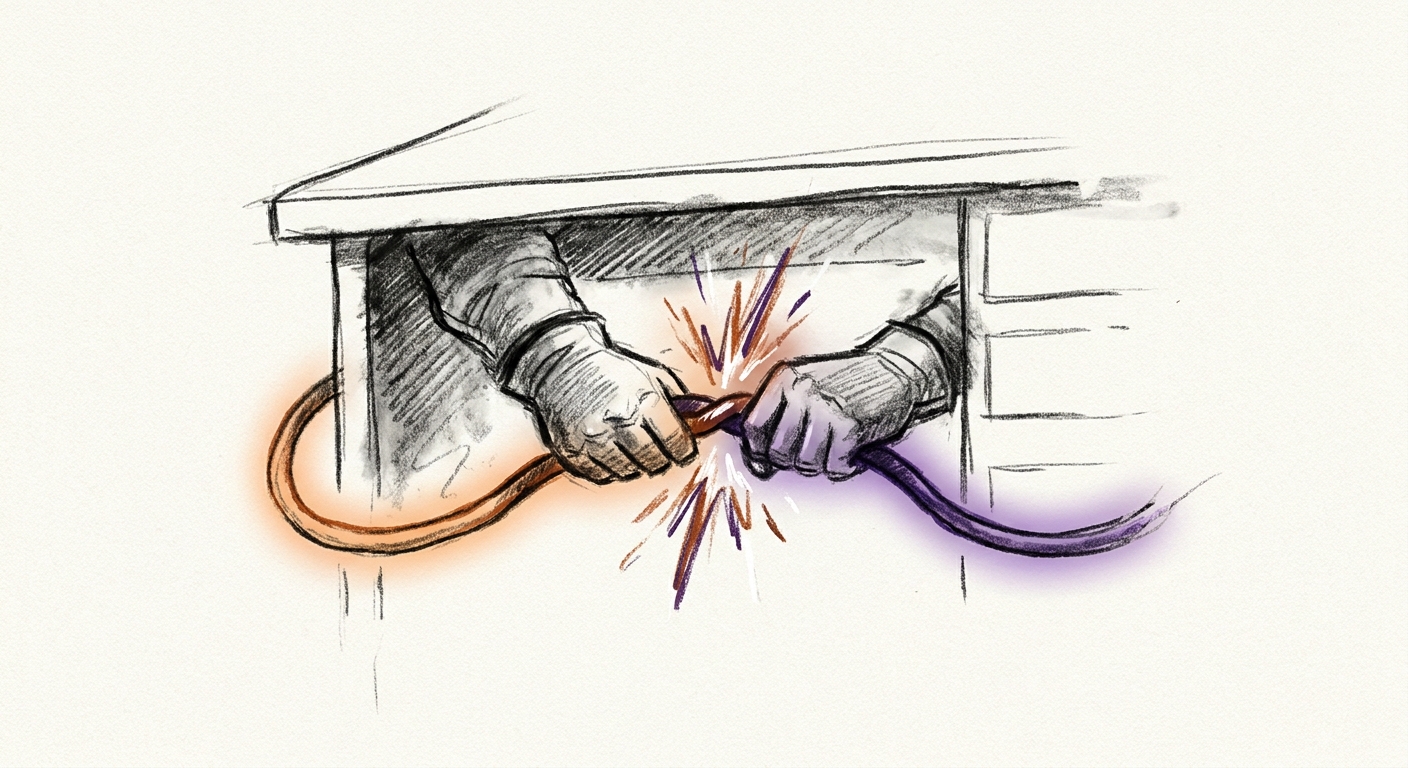
This scanner will never have a Product Hunt launch. It doesn't have a logo. It doesn't have a marketing site. It runs on my phone and talks to my CRM and that's it. If my business were a building, this tool is a pipe in the wall. You'd never know it was there unless it broke.
Here's what I keep coming back to. The best tools in any business are the ones nobody outside ever sees. They're the plumbing. You don't see them. They just work. You only notice them when they break.
Think of the tools that run a business each day. The bill nudge that fires on its own when a payment is 48 hours late. The email tool that sorts your inbox while you sleep. The booking tool that blocks your calendar when a client picks a time. You do not touch it. The report that pulls last week's numbers each Monday at 6 AM.
None of those sound fun. None of them would wow a crowd at a conference. But they are why some shops run smooth and others feel like duct tape and hope.
The demo trap
There's a gravitational pull in the AI space right now toward building things that look impressive. Demos. Showcases. "Look what AI can do" moments. And I get it. Those are fun. They generate attention. They make for good LinkedIn posts.
But I've been watching this industry for a while now, and the pattern I keep seeing is: the businesses that are actually pulling ahead aren't the ones with the flashiest AI demos. They're the ones that quietly automated 30 small things and now operate with half the overhead of their competitors. Nobody on the outside can tell. The owner just seems "really organized" or "really responsive" or "somehow always on top of things." The secret isn't talent. It's plumbing.
I fell into the demo trap early on. Built some flashy things. Showed them off. Got some "wow that's cool" reactions. But the cool things didn't save me time. They didn't reduce my overhead. They didn't make my business run better. They just looked good in a screenshot.
The card scanner looks dull in a screenshot. Just a form with some fields filled in. Boring. But it works right now. Every contact from yesterday's Chamber event sits in my CRM. Tagged. Ready for follow-up. That's not cool. That's just how it should work.
What "internal tools" actually means
When I say internal tools, I don't mean big company software. I don't mean a huge platform with user logins and SSO. I mean small tools, built for one job. They fix one problem at one business. Your business.
An internal tool might be a script that runs each morning. It sends you a Telegram with your top three tasks from your project board. It might watch your email for new invoices and log them to a sheet. It might check your website and ping you if response time goes past 500ms. It might be a card scanner.
Each one is small. Each one is boring. Each one saves you 5 to 15 minutes a day. And they compound. Ten small internal tools saving 10 minutes each is over 400 hours a year. That's ten full work weeks. That's not optimization. That's a structural advantage.
The best infrastructure is invisible
The best plumbing is the kind you never think about. Water comes out of the tap when you turn it on. That's it. You don't think about the pipes. You don't think about the pressure regulator. You just turn the tap and water appears.
That's what good internal tooling does for a business. You meet someone at an event and their contact info just appears in your CRM. You send an invoice and the follow-up just happens. You get an email and it just routes itself to the right place. No thought required. No friction. No "I should really get around to setting that up."
The setup is done. It just works.
So what's the point?
Here is the point. Say you are picking where to spend AI money. Or time learning AI. Skip the flashy stuff. Start with the boring stuff. Find the thing you do each day. The thing you hate. It takes five minutes. But it costs way more. It breaks your flow. It sits on your list. It nags you. It never gets done right.
Automate that. Build the small internal tool. The one nobody will ever see. The one that doesn't have a logo or a landing page or a Product Hunt launch.
Then do it again. And again. And again.
The best AI work isn't the demo. It's the work running in the background. Nobody claps for it. But that's the part that pays off.
← Back to all posts